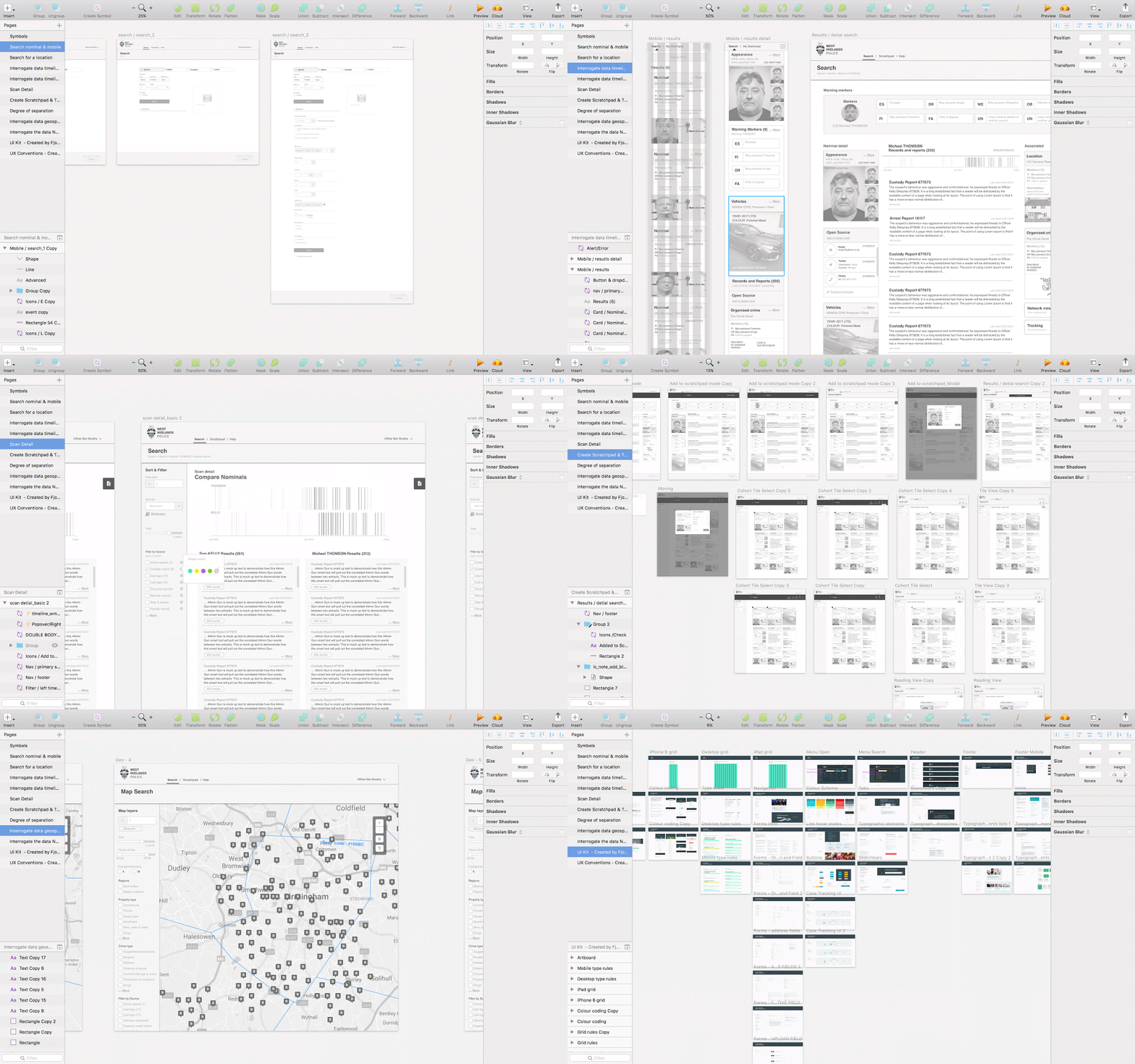
Data-driven Crime Search

West Midlands Police — Data-Driven Crime Search
West Midlands Police had a five-year mandate to modernise policing through better use of data. As part of this transformation, I worked on the research and design of a crime search tool intended to support officers operating in time-critical, safety-sensitive situations.
The Problem
Critical information needed to act on a crime was fragmented across multiple legacy systems, making it difficult for officers to quickly build situational awareness. In high-pressure scenarios, this fragmentation increased cognitive load and introduced risk, both to decision quality and to officer safety.
The Approach
We designed a unified crime search experience that surfaced relevant information at the moment it was needed. Search results were prioritised not only by relevance, but by risk to the officer, ensuring that potential threats, warnings, or safety-critical signals were visible before action was taken.
Due to data sensitivity and operational security, details of the underlying systems and datasets are intentionally abstracted. However, a core design principle throughout the work was continuous visibility of risk, shaping everything from information hierarchy to interaction patterns.
Why It Matters
In policing contexts, poor information design can directly contribute to harm. This project reinforced the importance of designing decision-support tools that reduce uncertainty, foreground risk, and help users act confidently in complex, real-world environments.

Designing search experiences that prioritise officer safety and situational awareness