MAIA - Mastercard’s Agentic AI Platform
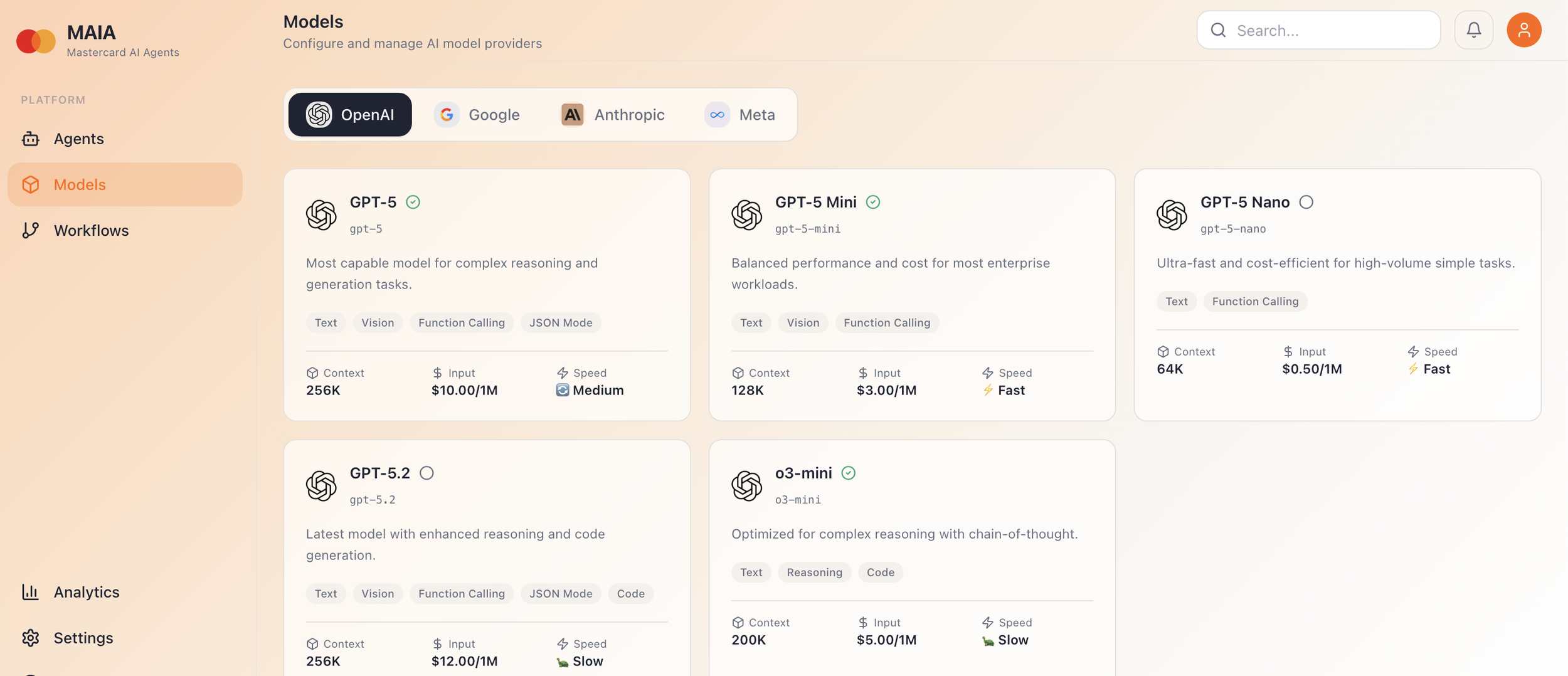
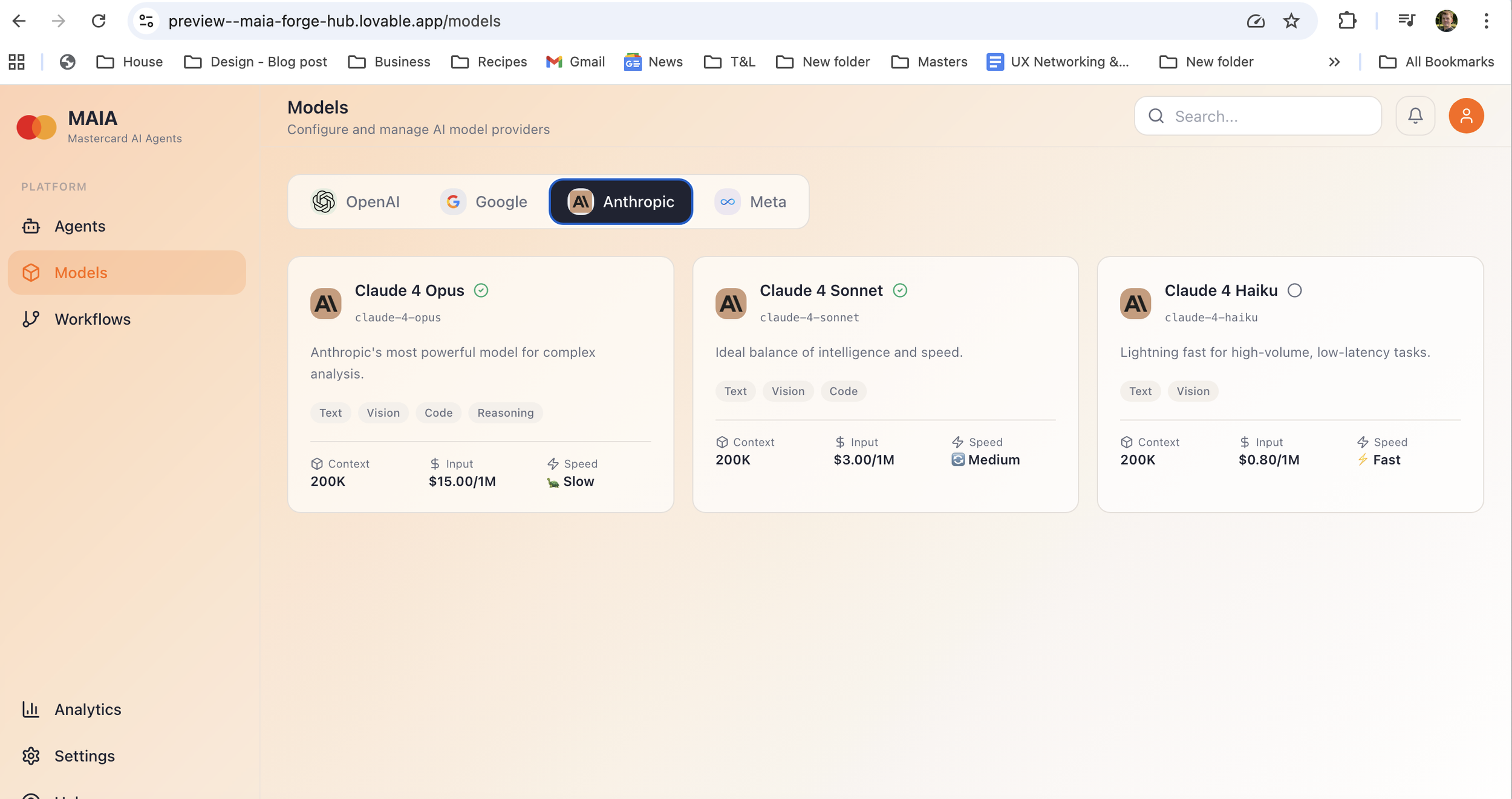
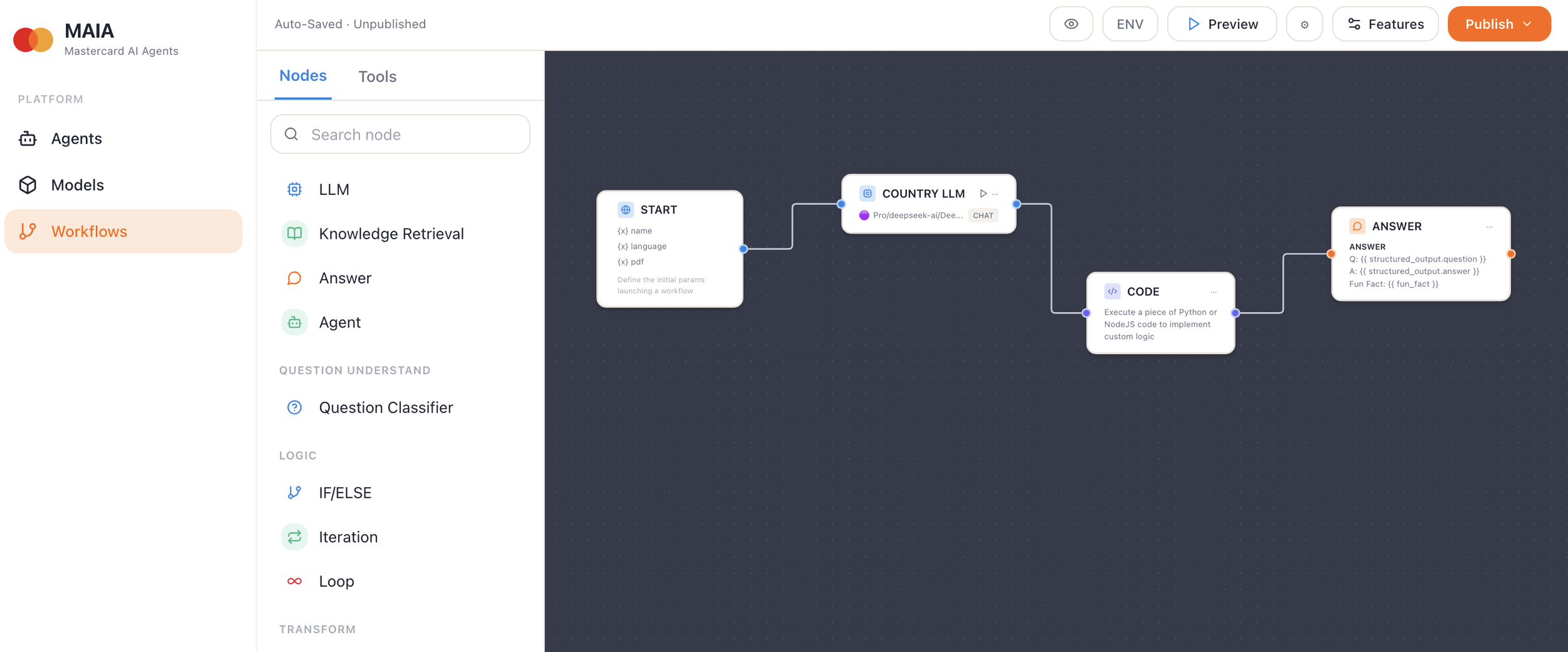
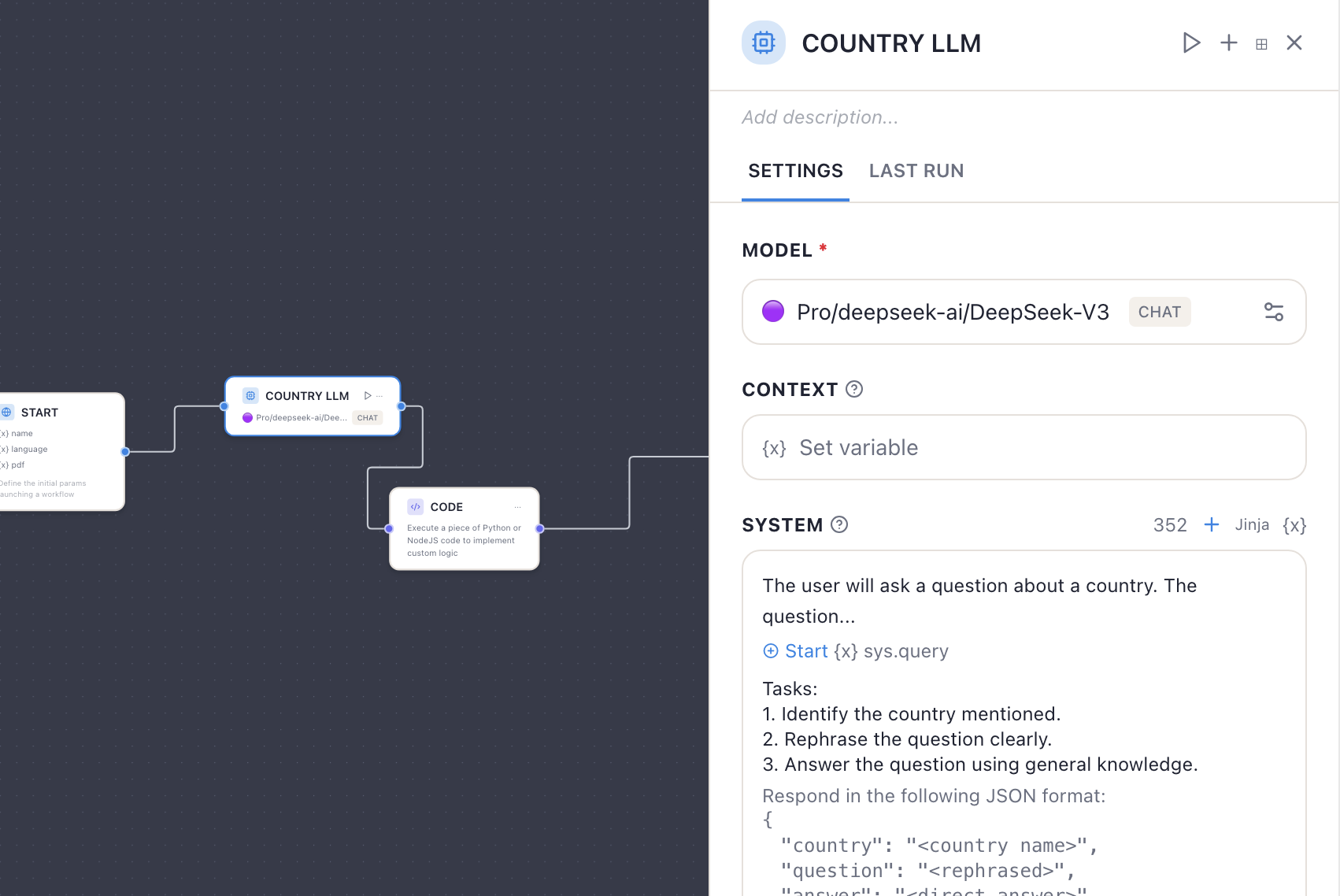
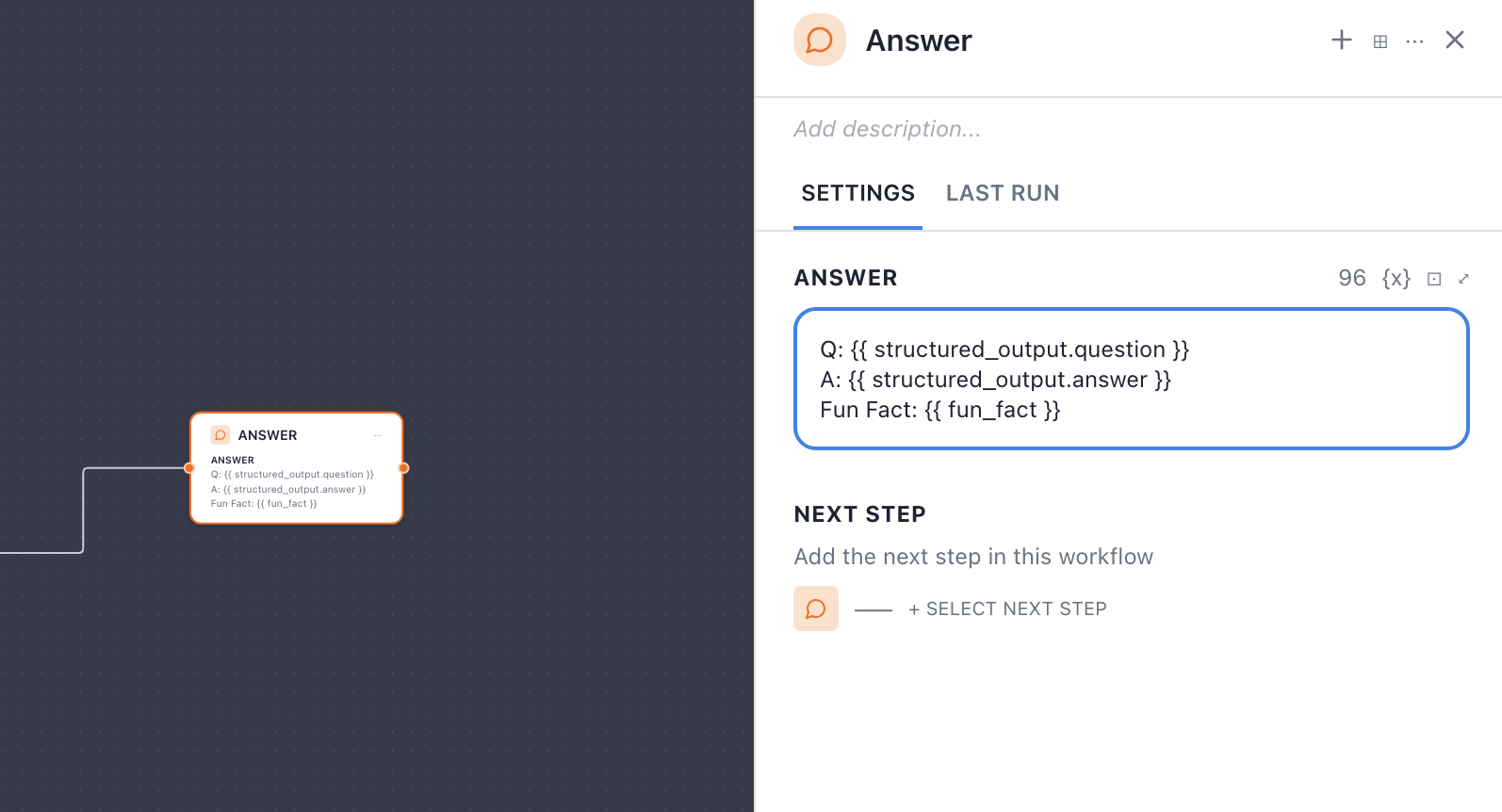
MAIA is an agentic AI platform that enables developers and product teams to design automated workflows powered by large language models, tools, and data sources. Using a visual workflow builder, teams can orchestrate multi-step AI agents that analyze inputs, retrieve information, make decisions, and trigger actions across systems.
AI-Native Design Process
From the outset of the project with Mastercard, I adopted an AI-native design approach. By connecting Figma Make with Mastercard’s MADE design system, I was able to rapidly prompt and generate live prototypes directly within the design environment. This workflow allowed concepts, components, and interaction patterns to be explored and iterated in real time, significantly accelerating the transition from idea to working prototype while ensuring consistency with Mastercard’s established design system.
Seamless Developer Handoff via Live Prototypes
Because prototyping at Mastercard moves very quickly, we adopted a workflow where the prototype itself becomes the primary source of truth for engineering.
Within the prototype we label areas clearly as “Ready for Dev” or “Design in Progress.” This allows engineers to immediately see which parts of the experience are stable and ready to build, while still allowing design to iterate rapidly on other areas.
Instead of working from static Figma files and repeatedly translating designs into code-based components, developers work directly from a single live prototype URL. This removes the common back-and-forth where inconsistencies appear between Figma layouts and the implemented UI.
The result has been a much more seamless handoff process, where design and engineering operate from the same live reference point. It has reduced ambiguity, improved alignment with the design system, and ultimately allowed engineers to ship features faster with fewer iteration cycles between design and development.
Intelligent Customer Support Agent
This workflow automates customer support by analyzing incoming user questions, retrieving relevant answers from product documentation or knowledge bases, and generating helpful responses. If the AI cannot resolve the issue confidently, the workflow escalates the conversation to a human support agent with the full context of the interaction.
Use cases
AI chat support for SaaS platforms
Automated help center assistants
Support ticket triage and routing
AI Knowledge Assistant for Internal Teams
This workflow connects AI to internal documentation, product resources, and company knowledge bases so teams can ask questions and receive reliable answers instantly. The system retrieves relevant information and generates contextual responses grounded in trusted internal data.
Use cases
Developer documentation assistant
Internal company knowledge search
Product or policy Q&A tools
Lead Qualification and Sales Automation Agent
This workflow analyzes incoming leads from forms, chats, or emails, extracts key details such as company size or product interest, and automatically scores and categorizes the lead. Qualified leads are routed to the appropriate sales pipeline or sales team.
Use cases
Sales lead scoring and routing
CRM enrichment and automation
Automated sales intake workflows